- Avalanche Breakdown Definition: Avalanche Breakdown is a phenomenon in a p-n junction where a rapid increase in reverse current occurs due to carrier multiplication.
- Carrier Multiplication: Fast-moving electrons collide with atoms, releasing more electrons and significantly increasing the current flow.
- Avalanche Breakdown Voltage: This is the specific reverse voltage at which Avalanche Breakdown occurs, denoted as VBR.
- Conditions for Avalanche Breakdown: It typically occurs in lightly doped p-n junctions when the reverse voltage exceeds 5 V.
- Temperature Effect: The Avalanche Breakdown Voltage increases with rising junction temperature, indicating a positive temperature coefficient.
Avalanche breakdown is a sudden rise in reverse current once carriers in a p-n junction multiply by impact ionization. A p-type semiconductor against an n-type semiconductor makes that p-n junction and a depletion layer at the contact plane. Forward voltage thins the layer. Reverse voltage widens it. Light doping makes a wider layer than heavy doping.
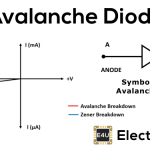
Figure 1 is the I-V curve in both bias directions. In forward bias the semiconductor current rises with the applied voltage. In reverse bias a small current still flows. That reverse saturation current IS is carried by minority carriers.

At first IS barely changes with reverse voltage. Past a threshold the junction breaks down and reverse current rises sharply. Faster minority carriers then strike host atoms and free more electrons.
Those new electrons free still more by breaking bonds. That cascade is carrier multiplication, so current through the p-n junction jumps. The event is Avalanche Breakdown. The voltage at the knee is VBR. avalanche diodes are built around that knee.
The efficiency of Avalanche breakdown can be expressed in terms of multiplication factor, M given by
Here, V and VBR represent the applied voltage and the breakdown voltage, respectively.
Avalanche breakdown is typical in lightly doped junctions above about 5 V. The carrier count is not set by a single field value, so the current is harder to hold than in tunneling. The Avalanche Breakdown voltage rises with junction temperature (positive temperature coefficient).